
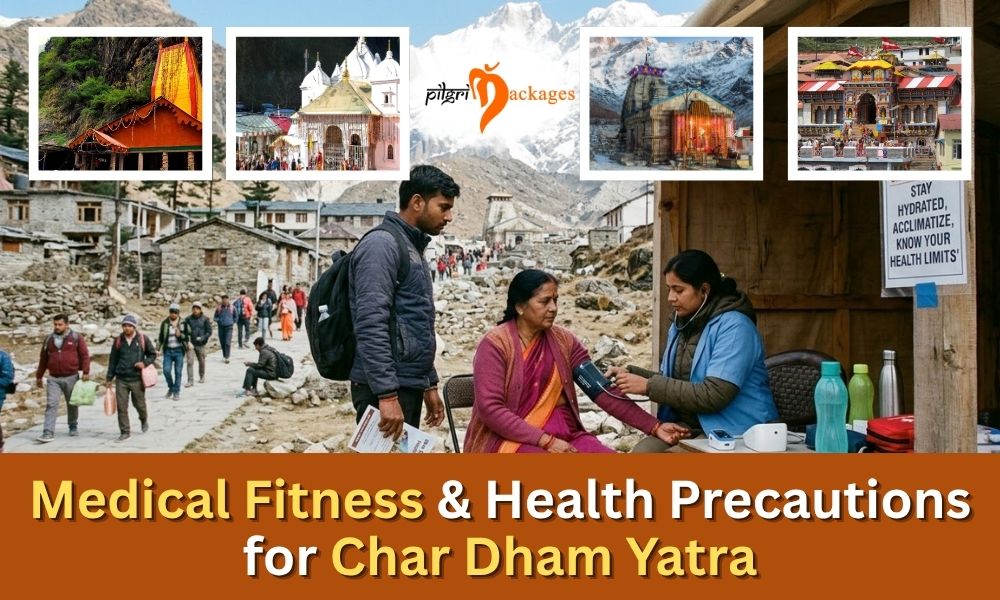
Every year, millions of Hindu devotees – numbering over 4–5 million in recent seasons – undertake the Char Dham Yatra, with tremendous faith in their hearts. But many devotees are not totally prepared for what the Himalayas demand from their bodies.
The holy shrines of Yamunotri, Gangotri, Kedarnath, and Badrinath sit between 3,100 and 3,600 meters above sea level, where the air is thinner, the weather is “no one can predict”, and even a short walk feels far more exhausting than it does back home.
Of course, the Char Dham Yatra is deeply rewarding, but it also asks for physical readiness.
In this guide, we have put our words not meant to discourage anyone from undertaking this holy yatra. We actually mean to help you arrive prepared, stay safe, and complete the journey as it deserves — with peace, strength, and full presence of mind, you know.
Before getting directly into precautions, it is good to know exactly what your body will encounter at each shrine.
Located at an altitude of 3,583 meters in the mountains, Kedarnath needs a tough trek of 16 km to reach there. However, at an altitude of 3,253 meters, Yamunotri is a little less remote and accessible via a 6 km trek from Janki Chatti. Gangotri, at 3,415 meters, is even more convenient, as you can drive right up to it. And finally, there is Badrinath at 3,133 meters, where comparatively very little walking is needed on the journey.
If you acknowledge these demands honestly, you can prepare for these four sacred dhams appropriately.
Honestly, anyone can suffer from altitude sickness, no matter what their age or fitness level. But some groups have to be particularly mindful.
Let’s talk about people above 50 years of age. They need to carry a medical fitness certificate from a registered doctor, as per the Uttarakhand Government. This certificate should ensure that your heart, lungs, and BP (Blood Pressure) are within an acceptable range for high-altitude travel.
Now, talk about people with pre-existing conditions like hypertension, diabetes, asthma, COPD (Chronic Obstructive Pulmonary Disease), or heart disease. These folks must consult their doctor before booking the Char Dham Yatra. High altitude puts extra strain on the cardiovascular and pulmonary systems, and what is manageable at home can become a serious problem above 3,000 meters.
Pregnant women are another group advised not to undertake the Kedarnath trek. If you are a pregnant lady and still want to do other parts of the yatra, you must have a discussion with your gynecologist before you make any plans.
Now, let’s talk about children under 10 years old; they should be assessed carefully. The Kedarnath trek, in particular, is strenuous, and young children may have a more difficult time coping with altitude changes, which can be hard to detect in the early stages.
One of the biggest mistakes many pilgrims make is treating the Char Dham Yatra as a regular trip to Manali or Kashmir. You should start your preparation for this sacred high-altitude journey in your body, ideally four to six weeks before you leave. Here are some things you can do as preparation for the yatra.
The first and honest thing: you don’t need to become an athlete. What you need is to gradually improve your stamina and breathing capacity. One of the most effective things that you can do is to briskly walk for 45 minutes a day.
If you can include stair climbing, light jogging, or yoga in your routine, it can better prepare you for the tough journey. Additionally, focus on building strength in your legs and knees, as the Kedarnath trek involves long distances over uneven, steep terrain.
Practicing Anuloma Viloma (alternate nostril breathing) and Pranayama for even 10 minutes daily will help your lungs adapt more efficiently to thinner air.
Ensure you have a complete health check-up at least two or three weeks before departure. Ask your doctor to assess your blood pressure, blood oxygen levels, heart activity, and overall fitness for high-altitude travel. If you take regular medication, be sure you have a sufficient supply for the entire trip, and take any prescriptions with you.
A good first aid kit for the Char Dham route should include:
Acute Mountain Sickness (AMS) is the most common health concern on the Char Dham route. It does not care who you are. It can mess with a fit person, a young guy, and a frequent adventurer just as easily as it can with someone who is older or less fit. The key is detecting the signs early.
Symptoms to Watch For
Mild symptoms typically disappear with rest, ample fluid intake, and time to acclimatize to the altitude. But, if they stick around or get worse, the smartest thing is to get down to a lower elevation and get some medical help. Do not wait it out, hoping things will improve on their own.
Do not continue climbing if you still have symptoms from the previous day. The shrines are not going anywhere. The Uttarakhand Government has established medical relief, health check-up centers, ambulances, and helicopter emergency services along the yatra route. That is comforting, but the prudent course of action is not to require them at all. And, therefore, just take your time straight.
If you are traveling from the plains, stay a night or two in Rishikesh or Haridwar. It will be good for you before ascending the hills. Along the way, don’t bear significant altitude on two consecutive days; instead, rest a day between.
A practical example: rest in Haridwar on your first night, stay in Barkot before Yamunotri, in Uttarkashi before Gangotri, and in Guptkashi or Sonprayag the night before Kedarnath.
At high altitudes, you lose water much faster than you believe, due to breathing and exertion. Aim to drink 3-4 liters of water per day during the trek, and do not wait till you get thirsty. You are good when your urine is pale yellow. Bring an insulated bottle; temperatures drop quickly, and cold water will cramp you. Plus, do not carry alcohol, a lot of caffeine, or sleeping pills. All of these merely accelerate dehydration and exacerbate altitude sickness.
Greasy or overly spicy food is hard on your stomach and can make you feel nauseous and very slow. Eat simple food such as rice, dal, khichdi, roti, boiled vegetables, and soups. Always come with some nuts, dates, and energy bars for the trek stretches where food stalls may not be available.
The largest rookie action is that of trying to keep pace with the group or hurrying up to complete. Select a pace that will not cause you to gasp. Take short pauses once every 20-30 minutes, concentrate on slow, deep breathing, and do not think that you are slower or faster than others. Patience is better than speed in the mountains.
The weather at the Char Dham sites changes without warning. Even the May and June evenings can be icy, and rain or hail may fall unexpectedly. Dressing in layers allows you to adapt as conditions shift. Carry thermal innerwear, a fleece mid-layer, a wind jacket, a waterproof jacket, woolen gloves, and a warm hat. Getting cold and wet together drains energy far faster than getting up the mountain.
Use sunscreen with SPF 50 or more and apply it to all exposed skin and reapply it after every two to three hours. The UV is more intense there, and you fail to notice that you have been burnt until it does.
Sturdy ankle trekking shoes with a non-slip grip are essential at Kedarnath and Yamunotri. Sandals, flat slippers, or smooth-soled shoes are dangerous on these trails, as they increase the risk of slipping, twisting your ankle, or straining your knees when descending.
If you or a fellow pilgrim has a heart or respiratory ailment, joint issues, or is not physically fit to walk, the helicopter service to Kedarnath is a genuine alternative. It is not just a matter of comfort. But altitude sickness may still be experienced when flying in a helicopter. Because the elevation change occurs even faster than with trekking. And therefore, all the precautions around hydration, rest, and symptom monitoring still apply regardless of how you reach the top.
In case of any real doubt about the fitness for the trek, consult your tour operator about the helicopter option before leaving home, not at the base.
The Char Dham Yatra is one of the greatest journeys a person can take. The mountains have welcomed millions of pilgrims across centuries, and they will continue to do so. But mountains want respect, not bravado. Preparing your body, listening to it honestly during the yatra, and knowing when to rest or turn back are not signs of weakness. They are signs of wisdom, and they are what allow you to complete the yatra fully and return home safely to your family.
May your pilgrimage be blessed, and may you come to every shrine with power in your body and calmness in your heart.
Planning your Char Dham Yatra 2026? Explore our specially curated packages that include medical support, acclimatization stops, and experienced guides for a safe and spiritually fulfilling journey.
It’s mandatory for pilgrims above 50 years of age. The Uttarakhand Government requires a fitness certificate from a registered doctor confirming that your heart, lungs, and blood pressure are suitable for high-altitude travel. For younger pilgrims, it is not compulsory but strongly recommended if you have any pre-existing condition.
Yes, you can do it if your blood pressure is well controlled. You should get medical clearance for high-altitude travel, carry all prescribed medicines, and monitor your BP during the journey. Avoid travel if your hypertension is uncontrolled or unstable.
The three best things you can do are acclimatize slowly by spending a night at a mid-altitude stop before climbing, keep well hydrated throughout the trek, and walk slowly without pushing yourself. Consult your doctor about whether or not Diamox is right for you before the trip.
It is safe with the proper preparation and planning. Senior pilgrims should undergo a proper medical check-up, carry a fitness certificate, consider taking a helicopter to Kedarnath, travel with a companion, and opt for a package that includes sufficient rest days. Rushing the itinerary is the greatest risk factor for older pilgrims.
Stop walking, sit down, and drink water. If you have a pulse oximeter, check your blood oxygen reading. If the reading is less than 90%, or if any symptoms such as severe headache, breathlessness at rest, or confusion are present, descend to a lower altitude immediately and seek medical help. Do not attempt to power through serious symptoms.
Children above 10 years in good health can generally handle the yatra with proper precautions. For the Kedarnath trek in particular, be honest about your child’s stamina. Pony and palanquin services are available for those unable to complete the full trek on foot. Children under 10 years should be discussed with a pediatrician prior to the trip.
3-4 liters of water intake a day is a good goal on active trekking days. Drink small amounts regularly instead of large amounts at once, and don’t wait until you’re thirsty, as thirst is a delayed indicator at altitude.