
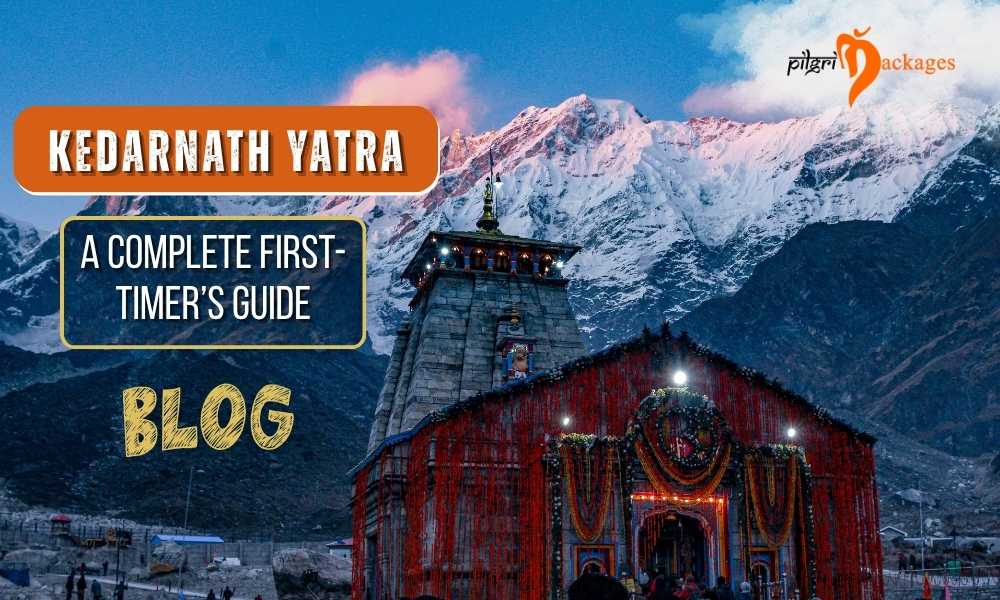
So, you have decided to go on the Kedarnath Yatra this year; you are not alone. Every season, hundreds of thousands of devotees make their way to this ancient Shiva shrine tucked deep in the Garhwal Himalayas. And many of them are doing it for the very first time.
The Kedarnath Yatra is unlike anything else. It is physically demanding, deeply spiritual, and tests your faith in ways you do not expect. At the same time, it also demands a kind of preparation that goes beyond just booking a hotel and packing a bag.
In this blog, we will cover everything a first-timer like you genuinely needs to know before setting out for Kedarnath in 2026. You will find information on the opening date, trek details, darshan timings, helicopter options, what to carry, when to go, and how to register. Let us get into it.
Kedarnath is not just one of the four dhams of the Char Dham pilgrimage circuit. It is also one of the 12 Jyotirlingas. And hence, it is also among the most sacred Shiva temples in the whole country. The temple is 3,583 meters above sea level and surrounded by snow-capped mountains. The sacred river Mandakini flows calmly right beside the temple.
The mythology behind Kedarnath is deep. According to the Panch Kedar legend, Lord Shiva manifested here as a bull, and devotees therefore call Kedarnath the “hump” form of Lord Shiva. After the Mahabharata war ended, the Pandavas went high into these mountains to seek forgiveness and blessings from Lord Shiva, and their journey turned this place into an eternal representation of penance and peace of mind.
And then there is the more recent chapter in Kedarnath’s history. When the destructive 2013 floods hit the valley, the main Kedarnath Temple remained standing strong. The workers and officials then rebuilt the walkways and added protective structures throughout the shrine, making it safer and more accessible to future pilgrims. That strength has, in fact, made this place even more revered by people.
The Kedarnath Temple Kapat will open on 22nd April 2026 at 8:00 AM. On the opening day, the temple is beautifully decorated with fresh flowers. A special Mahabhishek Puja is also performed in the early hours. The first darshan is considered extremely auspicious, and only a limited number of devotees are allowed inside during the initial rituals.
The Kedarnath temple closing date for 2026 is tentatively planned for 11th November 2026. After the temple closes, the deity is ceremonially carried to Omkareshwar Temple in Ukhimath, where worship continues through the winter months.
The season, therefore, runs from late April to early November, giving pilgrims a generous window to plan their visit.
This is one of the most common questions first-timers ask. And the honest answer is that it depends on what kind of experience you are looking for.
Late April to May is the opening rush. The excitement of a fresh season is real. Snow still dusts the peaks, and the atmosphere is electric. It is cold, sometimes very cold, but the mountains look spectacular. If you are planning to visit the Baba Kedarnath Temple during this period, expect larger crowds closer to the opening date.
June brings warmer days and steady pilgrim traffic. It is a comfortable month to visit if you want manageable weather and do not mind sharing the trail with fellow devotees.
July and August should be avoided if possible. The monsoon period carries serious landslide risks. Road closures and delays can derail even the best-planned itineraries.
September and October are genuinely the sweet spot. The skies are clear. The Himalayan views are breathtaking. And the trails are noticeably quieter. The cold intensifies sharply as November approaches, and nights can fall well below zero, but the overall experience during this period is hard to beat.
If this is your first time and you have the flexibility to choose, aim for September or early October.
To reach Kedarnath, you need to drive, walk, or take a helicopter. Gaurikund is the final point of road access and the official beginning of the trek. And, there is no shortcut past Gaurikund.
By Road: Most pilgrims base their trip in either Haridwar or Rishikesh, then drive to Sonprayag. At Sonprayag, there are shuttle services to Gaurikund, the official starting point of the trek. The route between Haridwar and Sonprayag will take about 8 to 9 hours, depending on the road conditions and the traffic.
Closest Rail Station: Rishikesh is the nearest main railhead, only about 216km from Sonprayag.
Nearest Airport: The nearest airport is Jolly Grant Airport in Dehradun, where you can hire a cab to take you directly to Sonprayag or Guptkashi.
This is where first-timers need to be honest with themselves.
The trek from Gaurikund to Kedarnath covers 18 kilometers one way. And it takes 6 to 8 hours at a typical pilgrim pace; it is not a casual walk. The path climbs steadily through forest, stone pathways, and mountain terrain. And the altitude makes every step feel slightly more demanding than it would at sea level.
However, it is absolutely doable for anyone with reasonable fitness and the willingness to go at a steady pace. Thousands of first-timers complete it every season; don’t worry.
Trek timings are strictly enforced.
These rules exist for your safety. Start early, ideally by 5:00 AM to 6:00 AM from Gaurikund.
Pony, palki, and kandi services are available for those who are not comfortable trekking the entire distance. These are a legitimate and practical option, especially for elderly family members or those with joint issues. Rates are regulated and displayed at official boards in Gaurikund.
The descent can be harder than the ascent for first-timers. Your knees bear much of the load when you are descending. So, wear proper trekking shoes with ankle support and take it slow.
If you or someone in your group can’t trek, hopping on a helicopter is a solid plan. Helicopters fly from three main helipads at Phata, Sersi, and Guptkashi, and take off usually around 6:30 AM, weather permitting.
You can book it online on the Heliyatra portal managed by IRCTC and state-approved operators. A round-trip ticket costs approximately between Rs 6,000 and Rs 14,000 per person, depending on which helipad you choose. These tickets fly off the shelves in the peak season, so book your tickets at least a month in advance.
One important note: you can still get altitude sickness on the helicopter, since the elevation gain occurs even faster than on the trek. Stay hydrated, rest upon arrival at the top, and do not rush into the temple line as you land.
If you are planning to visit the Baba Kedarnath Temple, do yourself a favor—check the temple timings in advance. It does not look like a big deal, but after that long trek, the last thing you want is to reach the temple and find the doors closed. Knowing the dates in advance also helps you plan your overnight stay and avoid the frustration of arriving at the wrong hour.
Morning darshan starts early, around 4:00 AM, and goes on till about 3:00 PM. Then there is a break, and the temple stays shut from 3:00 PM to 5:00 PM. And the authority is strict about it. So, you will not be allowed in during that time, no matter what. The temple reopens in the evening, from around 5:00 PM to 9:00 PM.
There is also the Abhishek Aarti at 4:00 AM, but that’s not for everyone; it is limited to VIP pass holders. Regular darshan usually starts closer to 6:00 AM. If you are really keen on attending that early morning aarti, stay overnight in Kedarnath. Trying to manage it the same morning can get stressful.
Also, if this trip is special for you, you might want to consider booking a puja, such as Rudrabhishek or Mahabhishek. You have to do it through the official temple channels, but many people feel it adds something extra to the experience.
There is one thing on Kedarnath that you absolutely cannot skip: yatra registration. It’s mandatory for everyone, no exceptions. You will be stopped at the Sonprayag Barrier (registration checkpoint) for checking. If you don’t have a valid yatra parchi with a QR code, you will not be allowed in.
The good part is that the yatra registration does not cost anything. You can do it online through the official Uttarakhand Tourism website or the Tourist Case Uttarakhand app. Plus, you can do it in person at offline counters in places like Haridwar, Rishikesh, Sonprayag, and Guptkashi.
When you are registering, just keep a valid ID handy (Aadhaar, Passport, or Voter ID). Plus, make sure your mobile number is active, as it is usually linked to your registration.
One thing more: don’t leave this till the last minute. Download your registration letter with the QR code before you start your journey. Officials can scan it at multiple points along the way, and the network can be patchy up there. So, it is safer to have it saved offline or even carry a printout.
Packing for the Kedarnath tour is not something you want to take lightly. The weather up there has a mind of its own, and it can shift from pleasant to freezing before you even realize it, especially if it is your first time.
There are a few things most people don’t usually think about until they are already on the trip, and by then, it’s a bit late. So, it is better to keep these things in mind early on.
First, book your stay in advance. Places along the Kedarnath route—hotels, guesthouses, even camps—fill up fast, especially in peak months like May, June, and October. Waiting till the last minute can leave you scrambling.
Also, the weather can cancel plans on short notice. If you are taking a helicopter, just know it is completely weather-dependent. Flights can get delayed or even cancelled for the whole day. It is honestly smart to keep at least one extra day in your itinerary just for this.
A lot of first-timers try to do Kedarnath as a quick up-and-down trip in a single day. It sounds efficient, but it’s exhausting and kind of takes away from the whole experience. You will be rushing the trek, barely spending time at the temple, and heading right back. Staying overnight makes a big difference; you get to slow down a bit and actually take it in.
Cash is another thing; do not rely entirely on UPI or cards. Connectivity can be patchy, and digital payments do not always work. Sonprayag and Guptkashi are pretty much your last reliable spots for ATMs, so withdraw what you might need from there.
And lastly, the crowds. Kedarnath is not some quiet, empty trail; it is busy, especially during the yatra season. There will be a steady flow of people almost the entire way. It can feel overwhelming at times, but that is part of the experience, too. Just go at your own pace and don’t try to rush through it.
Lakhs of first-time pilgrims successfully complete the yatra every year without any issues. So, yes, the Kedarnath Yatra is safe for even first-timers. The route is well-marked, and there are support services, such as medical camps, ponies, and palkis. The only thing you need to make sure that you are well-prepared. Build stamina first, wear the right outfit, and follow the authorities’ instructions.
Honestly, the Kedarnath trek is moderate. It is an 18 km one-way climb. You can do it if you are reasonably fit and take it at a steady pace. Being prepared beforehand, such as walking regularly or doing stair climbs, can make the experience much more comfortable.
September to early October is the best time, especially if you are a first-timer. The weather is clearer, and the crowds are relatively manageable. May and June are also fine, but they are generally busier, as it is the temple’s opening season.
Technically, yes. But first-time visitors should avoid this way. Because a same-day return can be physically strenuous and allows very little time to experience the temple in a tranquil manner. Staying overnight allows for a more relaxed and meaningful visit.
Helicopter yatra can be a sensible decision and a convenient alternative, especially for an aging pilgrim or someone with health concerns. But it is also dependent on the weather. Flights may be delayed or canceled. Another thing to keep in mind is to book well in advance, as seats usually fill up quickly during peak season.
You must have a valid photo ID (issued by the government, i.e., Aadhaar, passport, voter ID, etc.) and a Yatra registration number with QR code. A medical fitness certificate is also required for pilgrims who are above the age of 50.
Costs usually include accommodation, meals, transportation, and optional services such as ponies or porters. Digital payments are not a sure thing in rural regions, so bring enough cash. The exact amount depends on your travel style and duration of stay.
If it is your first time on the Kedarnath Yatra, this is all you need to know. It is not a type of trip one forgets after going. You never forget something about Kedarnath. It may be the mountains, it may be the temple, or it may be just the entire trip there. You will experience it more as you are returning down, with everything you just had in your thoughts.
There is no perfect way to “do” Kedarnath. The only thing that you have to do is be ready and not to hurry it up, but to give yourself the room to live through it, rather than to check on it like a checklist. The rest sort of falls into place on its own.
And if you are already planning your Kedarnath Yatra for 2026, it might help to look into well-organized packages, especially if it is your first time. It just makes things a lot smoother, so you can focus on the journey rather than the logistics.
Planning your Kedarnath Yatra 2026? Explore our specially curated Kedarnath-Badrinath packages and Char Dham packages, designed to make your first visit safe, comfortable, and spiritually fulfilling from the very first day.