
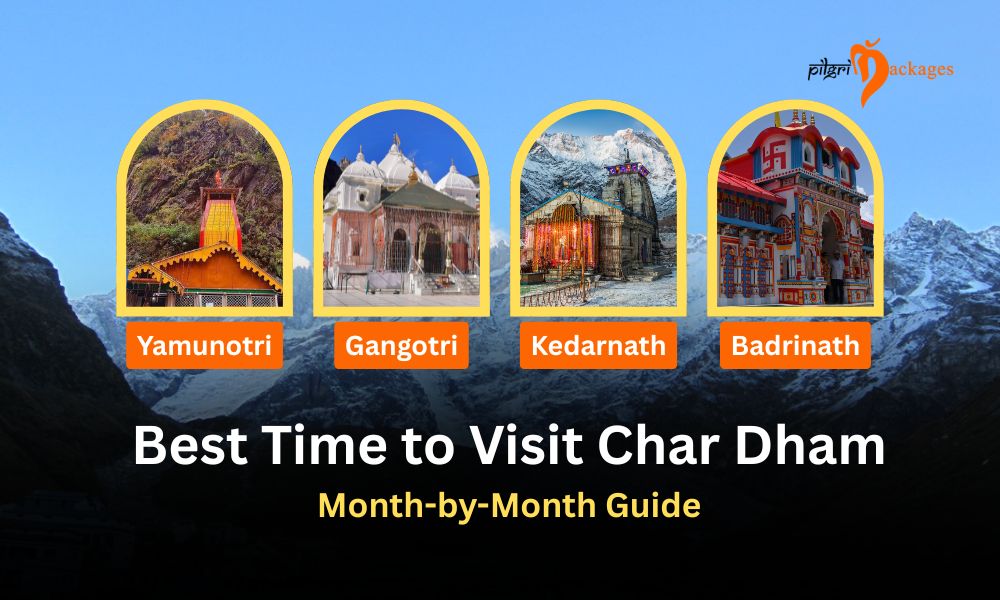
Planning for the Char Dham Yatra in 2026? If so, one thing you need to keep in mind is that timing matters a lot. It is essential not just for comfort, but also for safety. You know that the four shrines, Yamunotri, Gangotri, Kedarnath, and Badrinath, sit high in the Garhwal Himalayas. The weather in these Himalayan shrines changes fast, roads can get blocked, and temple opening and closing dates follow the Hindu calendar. This scenario can make or break your pilgrimage.
One important note that we want to share with you before jumping into the months is that the exact opening and closing dates for 2026 have been announced by the temple committees and priests. This year, the pilgrimage will start on 19th April, with the opening of Yamunotri and Gangotri temples, followed by Kedarnath on 22nd April and Badrinath on 24th April. These shrines typically close around late October or mid-November, but the exact dates can shift each year.
With that out of the way, here is a practical month-by-month guide for Char Dham Yatra in 2026.
The best overall months for Char Dham Yatra are May, early June, late September, and October. These months are, of course, sweet spots, but honestly, each month has its own vibe, and what works for you depends on what you can handle.
However, you should avoid July and August if you can, as these are peak monsoon months and there is a higher landslide risk.
If you love snow, plan your pilgrimage around late April and early May. These months still feel wintry, especially near Kedarnath.
All temples of the Char Dham open around late April. In plains, the weather might feel hot, but the weather in the mountains is still cold, especially at higher altitudes. Expect temperatures around 5 to 15 degrees Celsius during the day.
If you prefer fewer crowds and do not mind cold weather, this is the right time. You will have a peaceful, almost private experience at the shrines. However, you also need to watch out for routes that might still have patches of snow. Also, the Kedarnath trek can be tricky. Plus, there can be limited accommodation and facilities.
May is one of the most popular months for undertaking the Char Dham Yatra and is highly recommended. Because the shrines are open, the weather is relatively stable, and the roads are in better shape than during the monsoon. Gorgeous landscapes with wildflowers and pleasant weather for trekking are among the reasons many pilgrims prefer May for the Char Dham Yatra.
If you are doing the pilgrimage for the first time or want a safe, steady option, for sure, plan it for May. However, you will find crowds, especially on weekends. That said, book hotels and transport early, at least 2 to 3 weeks ahead.
June is the peak season for the Char Dham Yatra. Temperatures hover around 15 to 25 degrees Celsius in lower areas; however, it is cooler at the temples. Early June can be excellent because the overall weather is pleasant, and you will have the longest daylight hours for travel. Plus, you will find everything is fully functional.
Expect long queues at temples, crowded trails, and higher prices if you choose June for the pilgrimage. By mid to late June, monsoon showers often start to appear in Uttarakhand, and conditions can change quickly. So, plan for the first two weeks for a better experience.
June is great for the Char Dham Yatra if you can handle crowds and book early. Avoid last week.
July is the proper monsoon. It is usually not ideal for the Himalayan pilgrimage. If you choose this month, there can be a risk of landslides, especially near Kedarnath and Yamunotri, due to heavy rainfall. You may face delays due to road closures. And temperatures also drop slightly due to the rain. Even if the temples are open, you will find it difficult to reach them. Plus, many services also shut down or operate minimally.
So, avoid July to do the Char Dham visit. You can consider July for your journey if you are an experienced mountain traveler with a flexible schedule. Lush green valleys are a plus for the journey during this month.
July is absolutely not great for families, seniors, or anyone on a tight timetable. If you must go, make sure to travel in daylight, avoid night driving, and keep checking local advisories.
In August, you will find similar experiences to those in July. This month still observes the monsoon, so it’s better to avoid it. However, you can plan the Yatra toward the end of the month, as the situation may be better then.
If you want fewer crowds and can handle delays, you can consider August for the Char Dham Yatra. You will find waterfalls and stunning landscapes everywhere.
Honest take? Skip this month if it is your first Char Dham trip. If you still want to take the journey, plan it wisely. Carry essentials in a day bag, water, snacks, a power bank, rain protection, and basic medicines.
September is the best month to visit the Char Dham. (Point of view may vary). This month in the Himalayas is when the rain slows down and opens up the second fantastic window for the sacred journey. Roads begin to stabilize, skies open up, and the mountains look their best, contributing to your delightful experience. And the temperatures range from 10 to 18 degrees Celsius.
However, keep in mind that early September can still see occasional showers, and some trails might be muddy. Late September is better than the best. You can also see a noticeable increase in pilgrims again as conditions improve.
Although September is an excellent month for the Char Dham Yatra, note that early mornings can be chilly. So, pack warm layers.
October is another top month. Clear skies, stunning mountain views, clean air, and comfortable temperatures around 5 to 15 degrees Celsius are what make this month one of the best months to visit the Char Dham. Festive atmosphere as Dussehra and Diwali approach also makes it a favorite among many pilgrims.
If you want great weather and strong mountain views, consider October for your journey. However, you also need to watch out for cold nights, especially in Kedarnath and near Badrinath. Also, temples close by early November, so you are doing the pilgrimage against a deadline. Don’t push it too late into October. Pack proper winter layers, gloves, and a warm cap.
November is closing time. The temples close after Diwali, which falls around late October or early November. Thereafter, snow begins to return to higher elevations. If you want to catch the first few days, you will have the opportunity to witness the closing ceremonies, which are quite special. Watch out for sudden snowfall, cold temperatures below freezing at night, closures, and limited accommodation.
These months are the peak winter season. The Char Dham temples are closed, and heavy snowfall blankets the region. Roads are shut. This is not the pilgrimage season; you must not plan for it.
If you want the best Char Dham Yatra experience, here is the honest take.
The Char Dham Yatra is one of those journeys that stays with you. Getting the timing right means you will actually enjoy the spiritual experience instead of battling the weather or crowds.
If we had to pick just one month? It’s September. The crowds have gone home, the monsoon has done its work, and the mountains look absolutely incredible. But honestly, whenever you go, go with patience and an open heart, which matters more than perfect weather.
It would be an incredibly good idea if you choose the right Char Dham Yatra package for a smoother, guided experience. Char Dham Yatra packages from Delhi, Haridwar, Rishikesh, and even from metros like Mumbai, Kolkata, and Chennai are available. For seniors and time-constrained people, the Char Dham Yatra by helicopter is also a fantastic option.
Safe travels, and we hope your Yatra brings you everything you are looking for.