
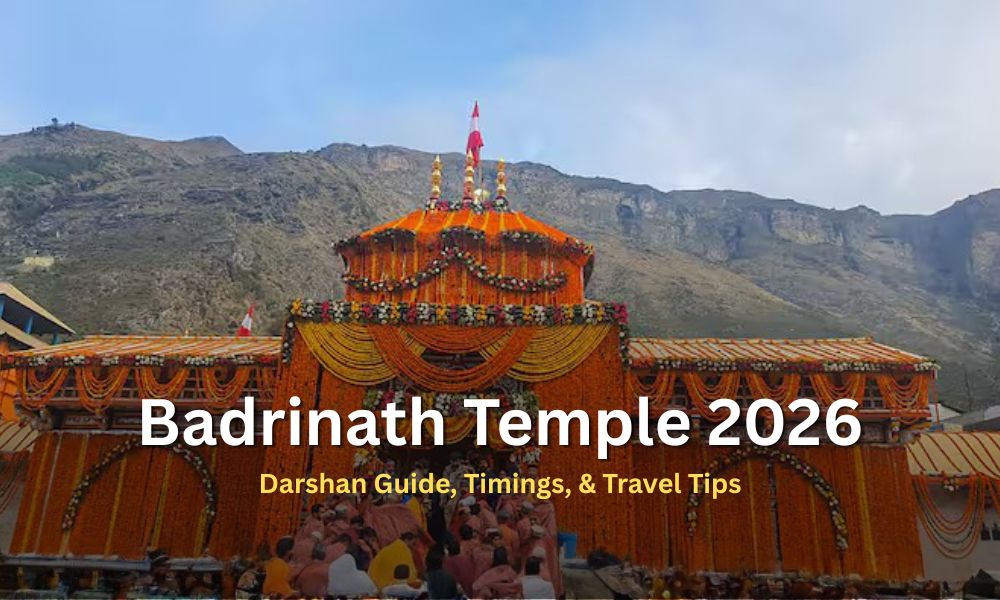
If you are planning a Badrinath Yatra in 2026, think of it as equal parts faith and high-altitude travel. Badrinath Temple, nestled in Uttarakhand’s Chamoli district in Badrinath Town on the banks of the Alaknanda River, at roughly 3,133 meters above sea level, is not just a pilgrimage; it is an experience that stays with you. Dedicated to Lord Vishnu, the temple offers a spiritual retreat like no other.
The high altitude is beautiful. There is something about the crisp Himalayan air at 3,133 meters that makes you forget the winding roads that brought you here. And it also means the weather can change fast, roads can slow you down, and a little planning goes a long way.
I think you already know that Badrinath isn’t open year-round; it’s seasonal. The temple door typically opens in late April or early May around Akshaya Tritiya, depending on the auspicious dates determined by priests. And it closes in late October or November, around Bhai Dooj, again depending on the Hindu calendar. For 2026, Badrinath Temple is scheduled to open for devotees on 23 April and close on 13 November.
Pro Tip: Please follow the official Shri Badrinath-Kedarnath Temple Committee announcements for confirmed dates.
There are fixed daily schedules at the Badrinath Temple for aarti, rituals, and darshans. But they can shift slightly due to weather, crowd load, and temple decisions. A typical darshan timing looks like this:
Aartis and rituals happen during timings. If you are visiting the temple on busy days like weekends or holidays, expect slower-moving queues. However, you will be surprised to see how smoothly the queue goes on quieter weekdays.
Pro Tip: Please note that the temple often closes briefly in the afternoon. During that gap, plan your lunch and rest instead of waiting in line unnecessarily.
Mahabhishek Aarti is one of the most prominent happenings at the temple. I am pretty sure you won’t like to miss this. If so, plan to arrive early. There is an amazing experience waiting for you this morning. The morning calm, combined with chanting echoing through the mountains, creates an atmosphere that is genuinely unforgettable.
Any journey, whether it is a trip to Manali or a pilgrimage, requires proper planning and preparation. And if you are planning a trip to Badrinath – the Abode of Lord Vishnu, you need to seriously consider that your planning and preparation are correct. If you don’t, the issues may happen.
One of the most important things that you need to know before you commence your trip is how to make darshan hassle-free. If you know the correct steps, your darshan will not only be satisfactory but also an experience to cherish for a lifetime. Let’s understand the correct approach to make your experience exactly what you wished for.
Many devotees arrive in Badrinath exactly on the day when they want to make darshan. This can definitely be chaotic and hectic. Avoid this. Instead, arrive by afternoon the day before your darshan. At this altitude, your body needs rest and appreciates a slower pace.
There are many things that you should not forget to carry; they include:
Most visitors go through the regular queue system. If any token/slot system is active during peak dates, your hotel, local helpdesk, or tour operator knows the current process.
Keep it short and maintain composure. Remember, rules about phones and photography may differ. Please pay attention to the signs and listen to the staff for instructions.
Badrinath is reached mainly by road. The route from Rishikesh takes 10–12 hours via Joshimath. Roads are decent, but expect hairpin bends and occasional delays, especially in the season.
By Road: If you are planning to visit Badrinath by road, the most common route with typical staging points is as follows:
Please note that mountain roads can be slow due to unpredictable weather, repairs, and traffic. So, always keep buffer time.
By Air: Jolly Airport (Dehradun) is about 135 km away from Badrinath. From there, you will need to take a taxi or a bus. It is a long road journey to Badrinath, so you will also need a night halt.
By Train: Haridwar and Rishikesh are the nearest railway stations. Most pilgrims start their journey to Badrinath from here. Remember that Rishikesh railway station has limited connectivity.
If you are thinking of where to stay in Badrinath, know that there are plenty of options. Depending on your budget, you can choose from:
If you want better facilities and don’t mind commuting, stay in Joshimath, which is 25 km away from Badrinath.
In season, rooms fill up fast, especially around weekends and holidays. Walking around looking for good accommodation at 3,133 meters is not fun. The best approach? Book your accommodation at least 2–4 weeks ahead for peak months. If you are on the Badrinath Yatra with seniors (your parents or grandparents), pick to stay closer to the temple to cut walking time in the thin air.
The weather in Badrinath is unpredictable. If you are planning to do the Badrinath trip in the summer and think there will not be cold weather, you are wrong. Even in the summer season, Badrinath has cold mornings and nights. Plus, rain showers are common as the season progresses. The weather can flip quickly from sun to cloud to drizzle in minutes.
So, be prepared for that and pack the following items to make your journey as comfortable as possible.
At 3,133 meters, mild altitude effects are common even for fit travelers. Here are some practical tips to help make the journey successful and comfortable.
Walk slowly, especially on arrival day. Overexertion (long hikes) on the first day can cause several health issues. Never ignore a persistent headache, dizziness, or breathlessness. If symptoms feel severe, descend and seek medical help locally.
Drink water regularly to keep yourself hydrated. I am not telling you to drink lots of water at once or whenever you feel thirsty. Just do it steadily. Plus, eat light, especially before darshan. And sleep early if possible.
I am pretty sure you want to have darshan at the Badrinath shrine in a peaceful, smoother way. If so, prefer weekdays. Go for darshan early in the morning, but be prepared for the cold. Avoid arriving and doing darshan on the same day if your road journey is long.
Peak crowd periods usually include weekends, school holidays, and major festival dates. Also, avoid the first few weeks after opening for a smoother experience because many people rush early.
There are many beautiful places and attractions in and around Badrinath beyond the main shrine. And it is always a good decision not to miss them. A few places that many pilgrims pair with darshan are as follows:
If you have more time, you can also consider visiting the Valley of Flowers and Hemkund Sahib, which are more than 20 kms from Badrinath.
Badrinath Yatra is not a quick temple step. It is one of the four destinations of India’s most revered pilgrimage circuit: Char Dham Yatra. It is a Himalayan journey that tests your endurance. Give it time, pack for cold mornings, and keep your plan flexible. With proper planning, you can make your darshan less like a rush and more like what it is meant to be.
Jai Badri Vishal. Narayan, Narayan.